Omnivore’s Dilemma

Written by Rocky Mountain Woman on February 29, 2012 – 1:39 pm -

This post is in honor of the letter “O” and part of Jenny Matlock’s Alphabet Thursday. For more ominous “O” posts, please click here http://jennymatlock.blogspot.com/

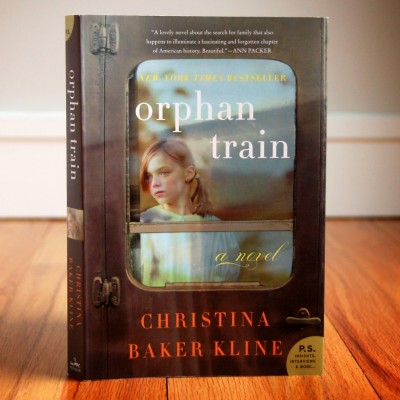
Michael Pollan is on the front lines in the battle to change the way we eat. He is a journalist with amazing research skills who went on a mission to find out where our food comes from and the effects of how we produce food on the environment, economy, politics and human health. He has written several books and I have read them all, but the Omnivore’s Dilemma is IMHO, the most comprehensive look at food issues today. If you have a desire to know more about the hows and whys of food production, you should start with this book.

In my opinion, any thinking person who eats food in America that hasn’t read this book, really should. A quote from the book explains why, “Is it possible that history will someday judge us as harshly as it judges the Germans who went about their lives in the shadow of Treblinka?”

I’m not a food nazi by any means. I eat fast food, I eat vegetables out of season, I drink wine from France and use olive oil from Italy. I do, however, think about where my food comes and how it is produced and this book has helped me decide where I stand on the issue and how much and what kinds of my food intake should be sourced locally. I work full time and have a house and animals to care for and am as busy as the next person at the drive through at McDonald’s. There are days when fast food or no food are my only options. I am attempting to work my way towards a more sustainable existence little by little. Everyone has to make their own decision based on budget, time and knowledge. This book can start you on the road to that knowledge.

xxoo,

RMW

Posted in She Loves | 23 Comments »

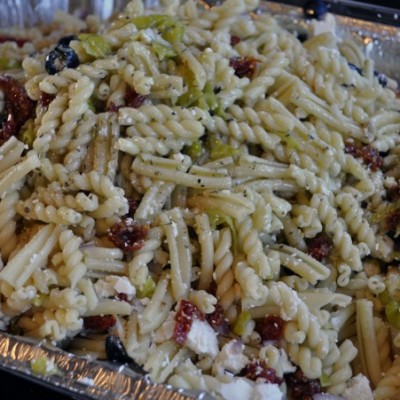
GREEK PASTA SALAD FOR A CROWD

Written by Rocky Mountain Woman on February 27, 2012 – 6:44 am -

This is my go to pasta salad when I cater. It’s super quick and simple to put together and everyone loves it! What more could you ask for?

Ingredients:

2 lbs of assorted pasta
1 can black olives
1 jar pepperoncini
1 jar sun dried tomatoes
1 small red onion, chopped
1 large brick, or two small of feta cheese, crumbled

1/3 cup vinegar – red or apple cider
3/4 cup olive oil
2 T dried oregano
1 t. dried basil
dash or two of Worcestershire sauce
1 T Dijon mustard
salt and pepper from the mill to taste

I like my dressing a little heavier on vinegar. If this is too much for you, just add a little more oil until it tastes balanced…

You can add more or less pasta, olives, pepperoncini, tomatoes, feta and onions to taste. Or add a little cucumber or some fresh tomatoes. It’s a pretty forgiving salad. This is just a basic recipe. Experiment!

Start by cooking the pasta according to package directions, drain and cool and put it in a large serving dish (I use a large aluminum roasting pan when I cater because then I don’t have to worry about losing the pan).

and add the olives to the pasta

with the red onion and tomato

chopped pepperoncini

and feta

put ingredients for dressing in a mixing bowl and whisk thoroughly

CAUTION: ACTION SHOT AHEAD…

Pour enough dressing over salad to moisten it, save the rest to add later if it starts to dry out

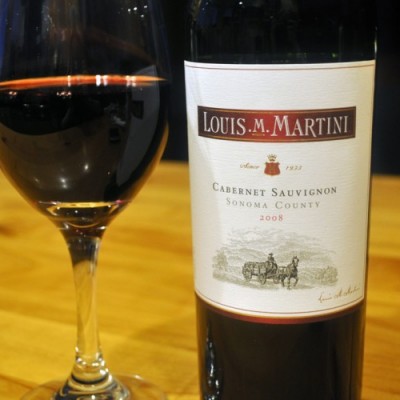
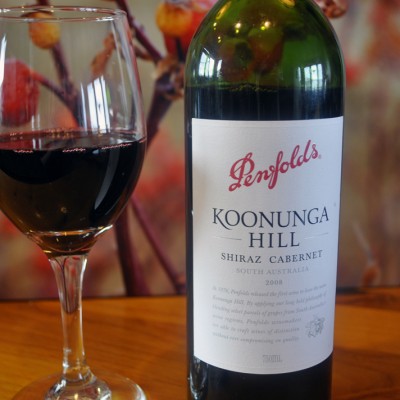
When I eat this at home, I usually open a bottle of Riesling or a crisp Sauvignon Blanc.

easy peasy…

Print This Recipe Print This Recipe Tags:
Posted in She Cooks | 21 Comments »

An Argument for Local Food Part V

Written by Rocky Mountain Woman on February 24, 2012 – 6:51 am -

For the beginning of this essay, click on “She Loves”

Some experts believe that this is the only legacy we can leave to our children. Their theory is that industrial farming is the only solution to a growing world population. Paul Collier, Professor of Economics at Oxford University, is one of those experts. In an article in the New York Times, he argues that even though the family farm is more romantic than a huge conglomerate, the food crisis the world is facing needs to be addressed with technology and innovation, not romanticism. He points out that the US and Europe are “rich enough to afford such folly”, but Africa is not. “In Europe deep-seated fears of science have been manipulated into a ban on both the production and import of genetically modified crops.” This is regrettable in Mr. Collier’s opinion, but not catastrophic in an area of wealth. He states, “Africa definitely cannot afford this self-denial. It needs all the help it can possibly get from GM [genetically modified] drought-resistant crops”. Small scale farming operations don’t appear to have anywhere near the production capacity of their mega sized counterparts. Subsistence farms in developing countries, many of which are run by women, sometimes even fail to meet the needs of the family that runs them. Is it reasonable to believe that small scale farms could produce enough food to feed the rapidly growing world population? Some scientists believe it’s possible. For example, Christos Vasilikiotis, Ph.D, University of California, Berkley, states in his paper on organic farming, “Counter to the widely held belief that industrial agriculture is more efficient and productive, small farms produce far more per acre than large farms”. He points out further that “Even in the United States, the smallest farms, those 27 acres or less, have more than ten times greater dollar output per acre than larger farms.

What about price? Industrial food is certainly cheaper than sustainably farmed food. However, if you factor in the cost to clean up the environmental impact of pesticides and herbicides and the impact on our carbon footprint caused by the production and movement of our food, the price of industrial food starts to climb. Add to that the health costs incurred battling obesity and heart disease caused by a diet of processed foods high in fat and calories, and it climbs even further.

Government subsidies of industrial agriculture add an additional burden to the production of sustainable food. Michael Pollen interviewed an independent meat producer struggling to operate a processing facility that caters to small farmers, who stated, “If we could just level the playing field—take away the regulations, the subsidies, and factor in the health care and environmental cleanup costs of cheap food—we could compete on price with anyone”. Subsidies to corn and soy farmers, whose products end up for the most part in the cheap processed food that leads to obesity, make it impossible for small farmers who produce a variety of more healthful food to compete. According to the website, Sustainable Table, “Between 1995 and 2006, the U.S. government spent more than $177 billion in taxpayer dollars on agricultural subsidies. In 2007, $5 billion in taxpayer funds were given to growers of corn, soybeans and cotton alone, despite their record profits that year. More than half of that $5 billion was paid to just 10 percent of all recipients, including the largest and most prosperous industrial farm operations.

to be continued…

Posted in She Loves, She Writes | 5 Comments »